Tradelands Recession Update – August 2026
We can now safely say that the boost in market performance in July was due to the timing of the summer release, and not a trend towards recovery. The economy of Tradelands added $1.31 Billion in new transactions in August, which was below the projected number of $2.0 Billion needed to see the economic growth return to the green. In other words, the economy lost $767.1 Million in August, meaning performance fell by -36.9%. This is despite a modest recovery in player count which has finally started to separate the game from Starlit Isles, which for most of the recession was at par or above the Tradelands player count.
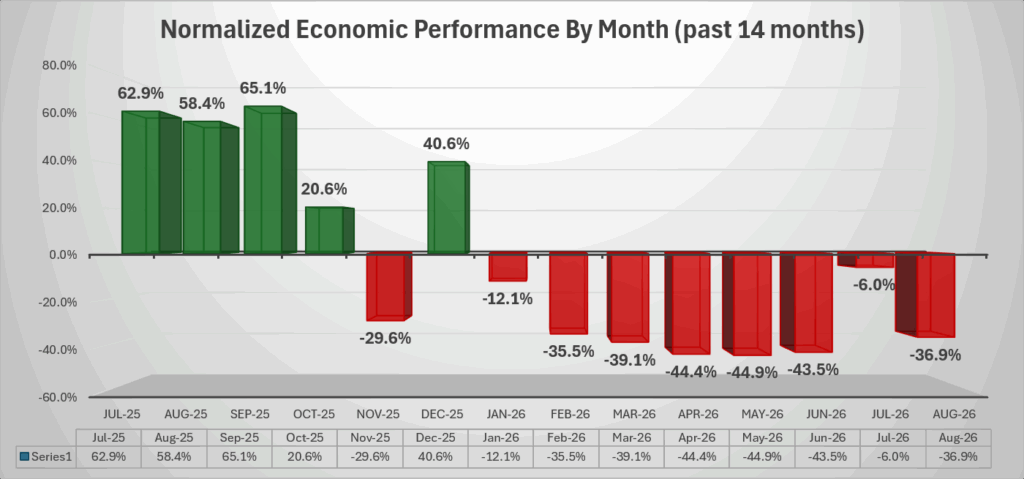
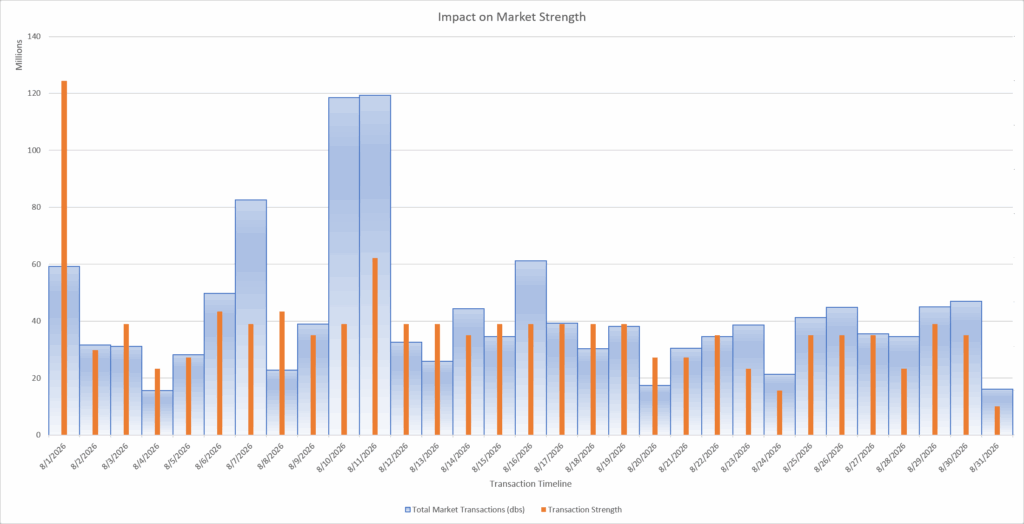
Despite the losses, it’s still the 4th best overall month of 2026. July and January are the only months that significantly outperformed August. Moreover, this is the best performing month that didn’t have a significant crate release. That said, it did have a major improvement to the game, the addition of the Salt Mine, and the top performing days of the month coincide with it’s release.
Coal Price Dips
Coal is showing some signs that is is not holding onto the coveted $400 price point. We saw some volatility in pricing starting on August 4th, which caused it to start losing momentum and briefly fall to $375 before sellers started raising prices again. The result is a month end finish at $388.27, down -1.25%.
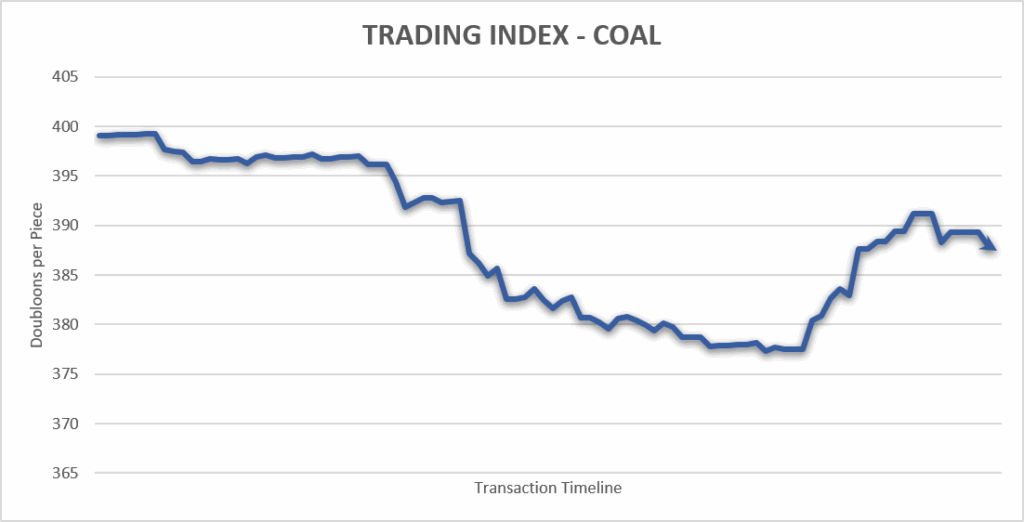
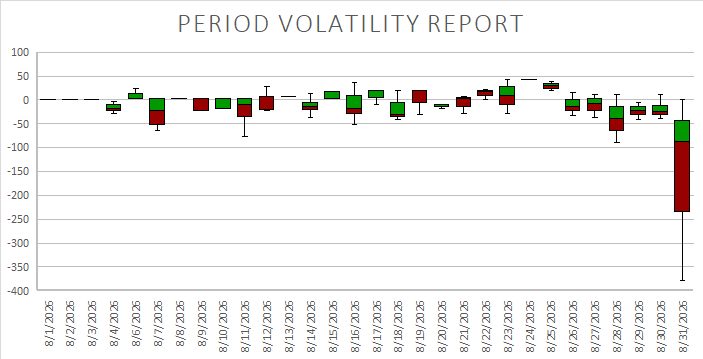
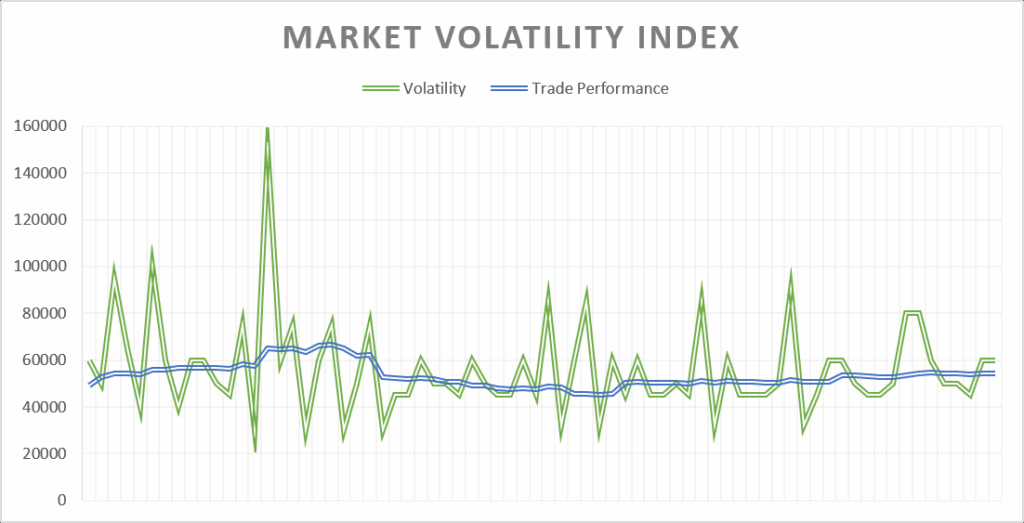
It’s worth noting that the volatility is almost completely driven by sellers, meaning there is a price war happening. This is common when you have an over-abundance of inventory that can be offloaded. In the real world, having excess inventory during a recession is a bad thing, as it leaves a strong possibility that it may have to be written off. However, Tradelands doesn’t have this problem, and players can simply wait it out or use the inventory on their own ships.
On the bond market, Coal has an interest rate of 6.0%, meaning it’s currently more profitable to trade coal bonds than it is to trade it on the Stock exchange. It is listed with a trending price of $387.49, meaning the current bond valuation is $410.74. Because it’s high volume is allowing reliable trend data, it’s also rated with a BBB (Stable) credit rating.
Electrosteel Bonds Fall Short
On the other hand, if you want to talk about a material whose bonds are under-performing, then we look at Electrosteel. The market for this material is among one of the most unstable since they changed the way it is gathered. We are well past the days where Electrosteel sold consistently over $10k per piece, with the material hovering closer to $6.5k per piece.
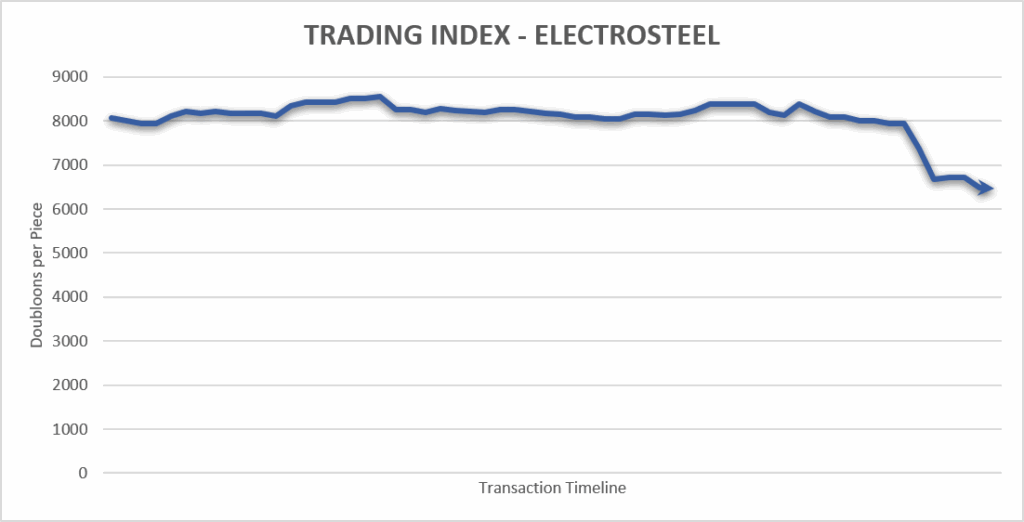
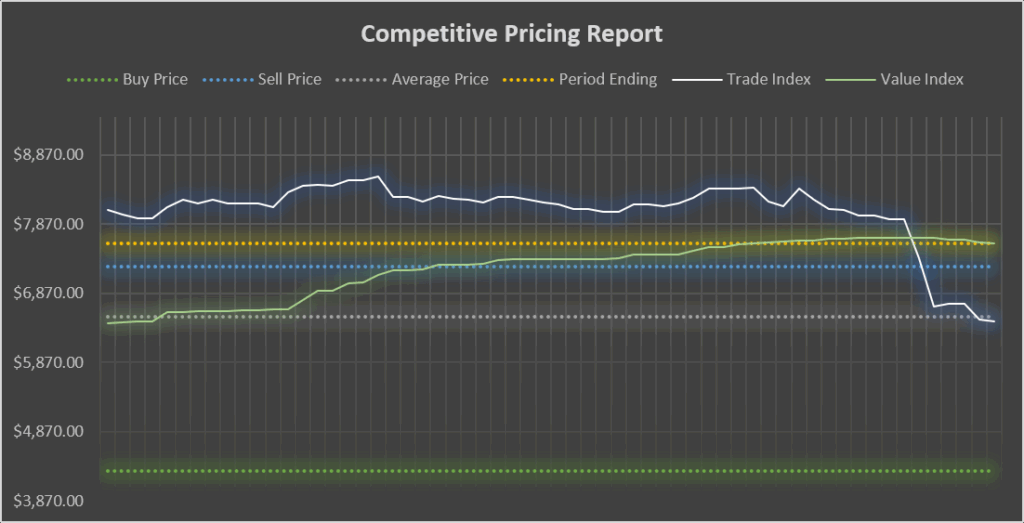
What this means is Electrosteel has been trading above it’s market price for most of August. However, this is likely just sellers attempting to raise the index and hopefully inflate their margins slightly. The drop at the end of the month, shows a price correction is inbound (the green line has peaked) and players will need a concerted effort to keep it inflated. Unironically, the average price (the gray line) sits at $6.5k which is right where our analysts projected it should be for the rare metal.
But the main thing to point out is that this volatility in the market is leading to very bad performance in the bond market. The line item for Electrosteel on the Bonds page shows this has a B (Unstable) credit rating and an interest rate of 13.8%, making the current bond valuation $7.362.86. This is lower than the current stock index price of $7,595.81. In other words, you are better off selling this item now on the stock market than on the bond market because you will make more money that way.
Crate Performance Post Release
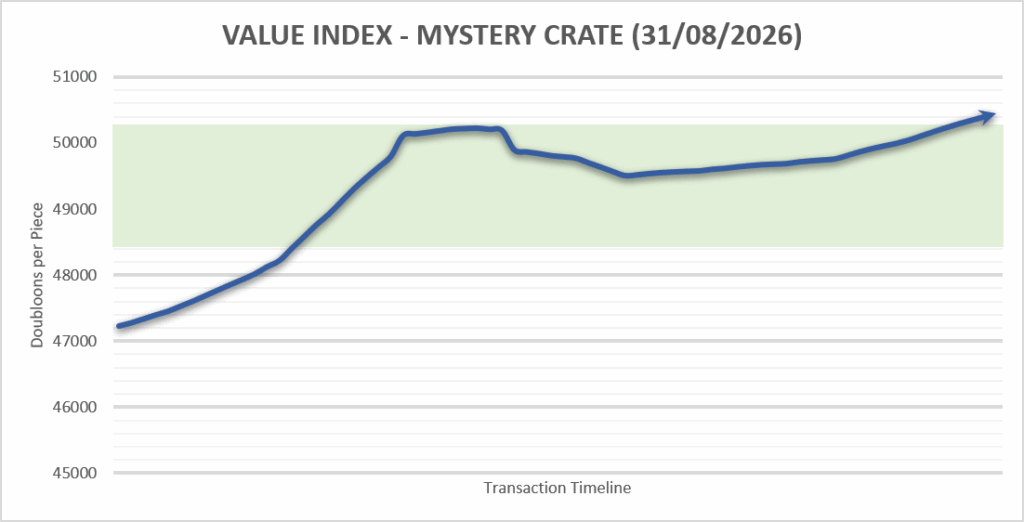
Now that the summer crates are off-sale, it’s time to evaluate how crates are performing overall. In short, the index has gained +6.39% in August, with a healthy mix of buyer and seller interest, closing at $50,443.38. This is about where we expected it to end, given that the market primed itself for a lower overall price point in June.
Stoat Over Valuation
Finally, we were asked to look into Stoat Blueprints and give our opinion on the current performance. In short, yes we do believe this blueprint is over-priced on the market. This seems to be an active attempt to bring the Stoat Blueprint in line with the Kingfisher Blueprint. The price for the Stoat Blueprint ended the month at $1,099,449.09. This is above it’s entry price point of $800k which means its performing above expectations.
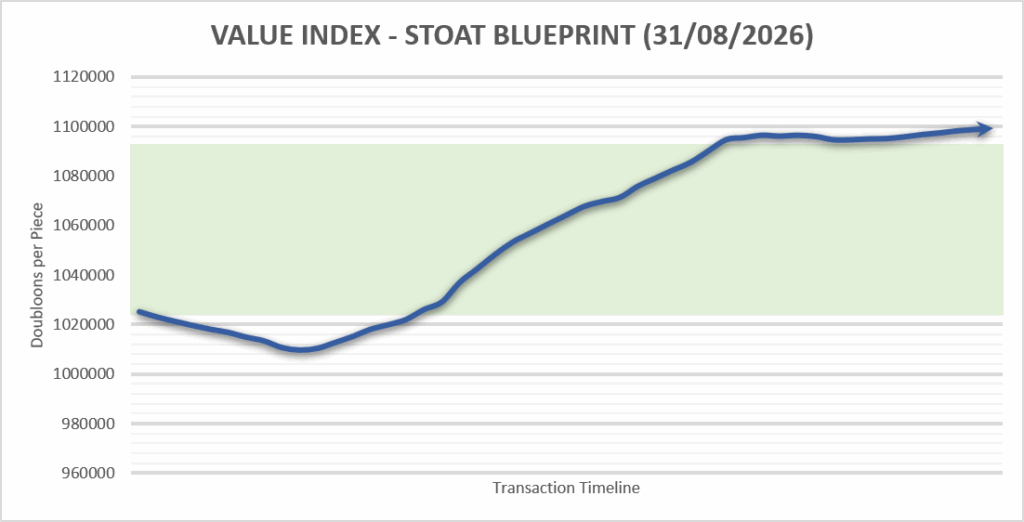
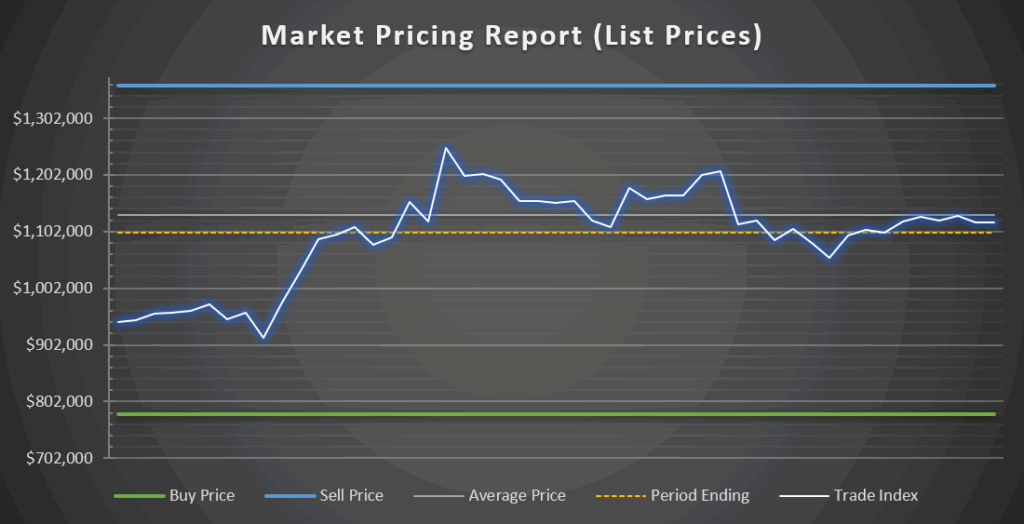
This is part of a perception that the ship is a good trader option, and if enough of the community believes it then the price will stick. This isn’t entirely incorrect perception, but it is overblown. We did an analysis of the Stoat’s trading performance and gave it an overall Trade Velocity of $46.920.89. This analysis is available over at the Ship Building Guide, and while it is one of the top performers in the game it is not better than the other options available to players, such as the Ceres, Camel, and Albatross which are all currently available without blueprints.
But the comparison changes when you are considering other blueprint ships. The Kingfisher performance at 37,532.92 in Trade Velocity, and the Kingfisher Blueprint trades at around $2Million (Currently valued at $3.26 Million). The Demeter, with a higher Trade Velocity of $50,627.91, has a blueprint that sells at $4.18 Million. So if you remove comparison to other ships, and look at it as purely a comparison of trade ship blueprints, the rise in price is due to players trying to evaluate the Stoat as the economical option in this category, not because it’s the better trade ship in the game.
In other words, the Stoat Blueprint is worth more as a blueprint than it is as a ship.